

In recent years, we have witnessed an unprecedented level of division within American families, often driven by the influence of the “Make America Great Again” (MAGA) movement. While political disagreements are not new, the rupture that many families are experiencing is deeper than mere politics—it touches upon fundamental moral differences that have emerged as lines are drawn in society.
Moral Conflicts and Political Allegiances
At the heart of the divide lies a confusion between political allegiance and moral conviction. For many, support of the MAGA movement has become more than a matter of political preference; it has transformed into an identity shaped by a particular set of values. The rhetoric and principles espoused by the movement have given rise to a deep sense of us-versus-them, where differing perspectives are not merely seen as disagreements, but as threats to a way of life.
In families where some members have embraced the movement and others have not, this identity-driven allegiance often leads to conflict. One woman, for example, shared how her daughter could no longer bring herself to attend family Thanksgiving gatherings. What once was a holiday filled with laughter and warmth had become an ideological battleground. Her daughter’s commitment to social justice and racial equality directly clashed with her father’s support of MAGA, which she saw as endorsing the very issues she fought against. Year after year, the gap widened, leaving a once tight-knit family fractured and alienated, with both sides feeling misunderstood and hurt.
When political movements, like MAGA, prioritize nationalism, exclusion, and a hierarchical sense of power, they create moral chasms within families whose members are committed to the teachings of love, inclusion, and humility.
The Moral Difference: Love vs. Power
This divide goes beyond arguments about policies or candidates. It is a rift rooted in conflicting visions of what is fundamentally good and right. On one side, many followers of Christ hold to the teachings of Jesus: a commitment to love one’s neighbor, show compassion to the marginalized, and seek reconciliation over division. These values transcend politics; they speak to the moral fabric that undergirds faithful living. On the other side, the MAGA movement often promotes a posture of dominance, prioritizing power and self-preservation, even at the cost of others’ well-being.
This tension plays out in countless families. One mother, deeply rooted in her Christian faith, finds herself at odds with her eldest son, who has embraced the MAGA movement. For years, she had nurtured in him values of compassion, humility, and service, but now their conversations about faith are filled with tension. The son accuses her of being too “soft,” while she grieves the loss of the empathetic boy she once knew. They still love each other, but that love has become strained, with both struggling to reconcile their moral convictions with the relationship they once held dear.
Christ’s teachings emphasize humility, service, and the willingness to sacrifice for the greater good. In contrast, the MAGA movement often glorifies a form of strength that comes at the expense of the vulnerable. This has created moral clashes within families where one side perceives the movement as prioritizing self-interest, while the other sees adherence to Christ’s call to love and uplift the least among us.
When a family member chooses the path of Christ’s radical love, it may be perceived as a rejection of the power-driven ideology of MAGA. Conversely, those who align with MAGA may feel that their worldview is threatened or disrespected. This moral clash, disguised as a political disagreement, can lead to estrangement, resentment, and heartbreak within families.
The Real Human Cost
For many families, the consequences of these divisions are painfully real. Holidays and gatherings that were once filled with joy and connection have become battlegrounds for ideological clashes. Conversations devolve into arguments, and relationships that were once sources of love and support have become sources of tension and bitterness.
Consider the example of grandparents who, after years of being a part of their grandchildren’s lives, find themselves cut off. Their support of MAGA and the exclusionary ideas that come with it created a chasm between them and their adult children, who have chosen to shield their children from ideologies they view as harmful. The grandparents feel confused and alienated, while their children bear the heartbreaking weight of protecting their moral values over familial connection. These are not simple choices; they are decisions made in the face of deep moral conflicts.
Some family members find themselves in the heartbreaking position of having to distance themselves from relatives whose allegiance to the movement fosters attitudes of racism, xenophobia, and hatred. For them, the choice is clear: maintain a relationship at the cost of one’s moral integrity, or uphold Christ’s call to love and justice, even if it means stepping away from those who perpetuate harmful ideologies.
These choices are not made lightly. Many who follow the path of love continue to hold out hope that reconciliation is possible, that their family members can move away from ideologies of division and embrace a more inclusive and compassionate vision. But hope does not negate the reality of moral compromise. Aligning with ideologies that dehumanize or exclude cannot coexist with the command to love as Christ has loved us.
Families as the Foundation of Faith
In the Christian tradition, families are seen as the foundational communities where faith, love, and values are nurtured. When these communities become fractured, the wounds are deep and lasting. The MAGA movement has caused such wounds by prioritizing political victory and social dominance over the bonds of kinship and shared humanity.
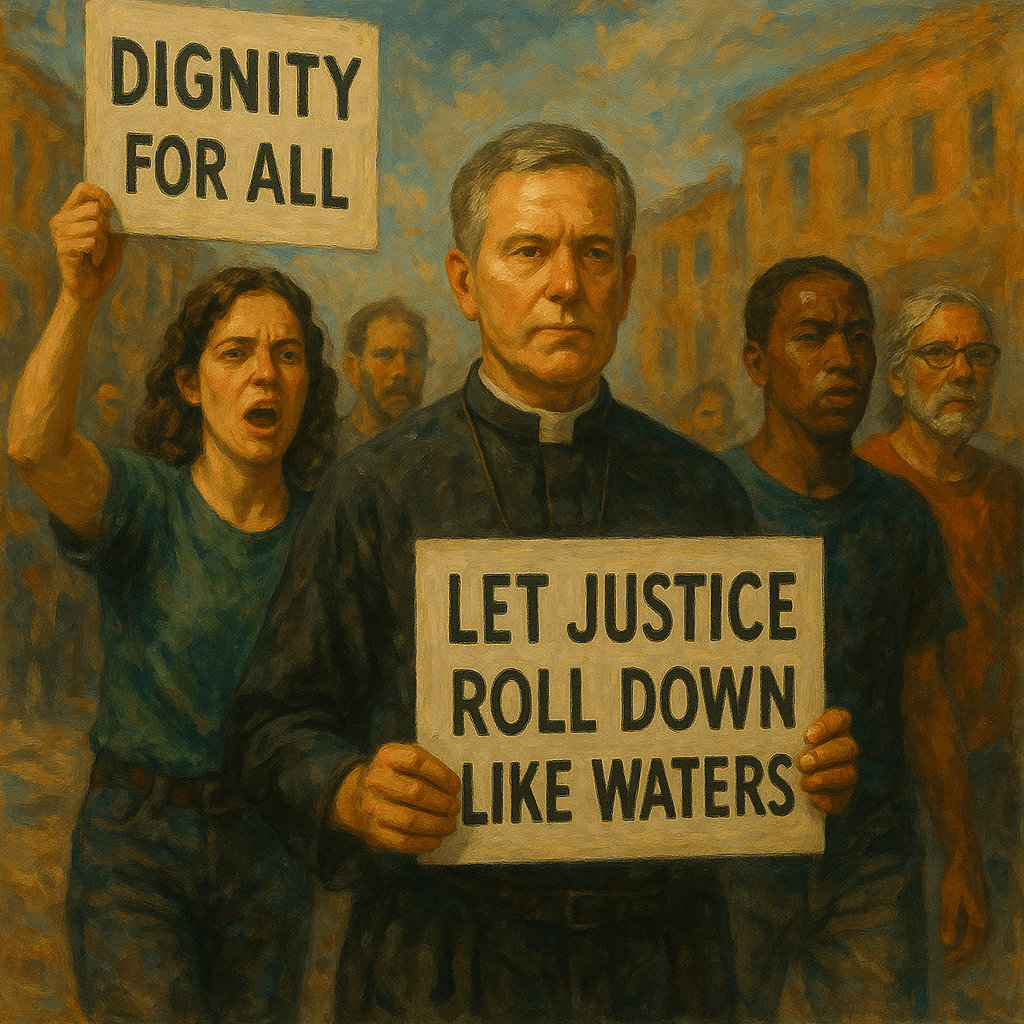
But these wounds also serve as an opportunity for the church to respond. As Christians, we are called to be agents of reconciliation, not by ignoring injustice, but by courageously standing for what is right while extending compassion to those with whom we disagree. We must strive to create spaces within our families and communities where difficult conversations can happen with grace and integrity, not by sacrificing truth, but by pursuing it with love.
Moving Forward with Faith and Love
Healing these rifts will not be easy. It requires the courage to speak truth to those we love and the humility to listen with open hearts. It requires an unwavering commitment to the values of Christ, who calls us to love those who persecute us, seek justice for the oppressed, and serve one another in humility.
Ultimately, the destruction of families caused by the MAGA movement is not just a political issue; it is a moral one. It challenges us to examine where our deepest allegiances lie and to whom we give our loyalty. As followers of Christ, our loyalty must always be to the kingdom of God—a kingdom of love, reconciliation, and radical inclusion. It is this kingdom that must guide our relationships, even with those who have become ensnared in ideologies of division.
The path forward is not an easy one. It requires us to bear witness to Christ’s love in the face of division and to extend grace even to those whose actions have caused us pain. But in doing so, we honor the call of Christ to be peacemakers in a broken world.
In closing, may we have the strength to stand firm in our convictions, the humility to listen with open hearts, and the grace to love even when it is difficult. And may we be bearers of hope and healing in our families, our communities, and our world. Amen.e to love even when it is difficult. And may we be bearers of hope and healing in our families, our communities, and our world. Amen.
The Rev. Allison Burns-LaGreca
 thoughtsprayersandart.com
Leave a comment