

Today, as I watched the burial service for President Jimmy Carter taking place at Washington National Cathedral, a quiet ache settled over me. The words of his family, friends, and colleagues painted a portrait of a man whose life was a hymn of justice, mercy, and humility. Each eulogist shared stories of his kindness, his unwavering faith, his steadfast belief that love and compassion could heal the world.
As I listened, tears welled in my eyes—not only for the man we were laying to rest but for something much larger. It felt as though we were saying goodbye not just to a servant of Christ but to a vision of what this country once aspired to be: a place where character mattered, where truth held weight, and where dignity was the foundation of our shared humanity.
When John Lennon’s Imagine filled the cathedral just before the Lord’s Prayer, something inside me broke open. That familiar melody carried with it a longing, a yearning for the world we still dream of but have yet to fully realize. A world where love, justice, and mercy reign. As the words lingered, so too did the question: Have we lost our way?
It’s a question that refuses to fade, echoing in the quiet spaces of my soul and settling into a deeper ache—a gut-wrenching certainty that we have indeed lost our way. The world of love, justice, and mercy that we imagine feels increasingly distant, obscured by the noise of division and the shadows of self-interest. And yet, even in the heaviness of this realization, another question arises, softer but persistent: Is it too late to return? Can we reclaim the goodness and grace that once felt so central to our identity, both as individuals and as a nation? As we reflect on the life and legacy of President Carter, it becomes clear that the answer lies not in abandoning the questions, but in confronting them with courage and humility. To begin, we must ask ourselves: What have we buried?
What Have We Buried?
President Carter’s life was a sermon in action, a living embodiment of the words of Micah 6:8: “What does the Lord require of you? To act justly, and to love mercy, and to walk humbly with your God.” He lived those words in the quiet dignity of his work and in the boldness of his convictions sacrificing political gain and favor for a moral and ethical higher ground rooted in faith. He showed us that greatness is not measured by power or prestige but by the willingness to serve, to lift others up, and to walk humbly before the Lord.
But today, as we mourn his passing, I cannot shake the feeling that we are burying more than a man. Are we also burying a time, an era when decency, integrity, and trust were not merely aspirations but expectations? Are we, at the very least am I, mourning a nation that once valued humanity and dignity above all else?
The ache of this question presses deeply on my soul. There was a time when the heart of our country beat with compassion and purpose, with care and love for our neighbor, when truth and justice held a sacred place in our collective conscience. We were a community that cared for more than ourselves. Today, it seems that the pulse has grown faint, drowned out by the noise of division, greed, and fear – by billionaires with an unquenchable thirst for more – by selfishness that looks only at how will a decision affect me. This leaves me mourning for our nation and longing for the Kingdom of God.
This mourning is not just personal. I know that to be true. I have connected with many who feel it, sense it as an inner knowing. It is collective. It is the cry of a people who feel the weight of what has been lost, yet cannot fully name it. It is the ache of a nation longing to find its way back to the ideals that once bound us together—compassion, purpose, truth, and justice. And yet, amidst this grief, there is a holy invitation. Scripture reminds us that lament is not a sign of defeat but a sacred act of hope. Lament allows us to name our sorrow, to cry out against what is broken, and to make space for God’s redeeming work. It is in this spirit that we must turn our mourning into lament, for only through lament can we begin to seek healing and restoration.
A Time to Lament
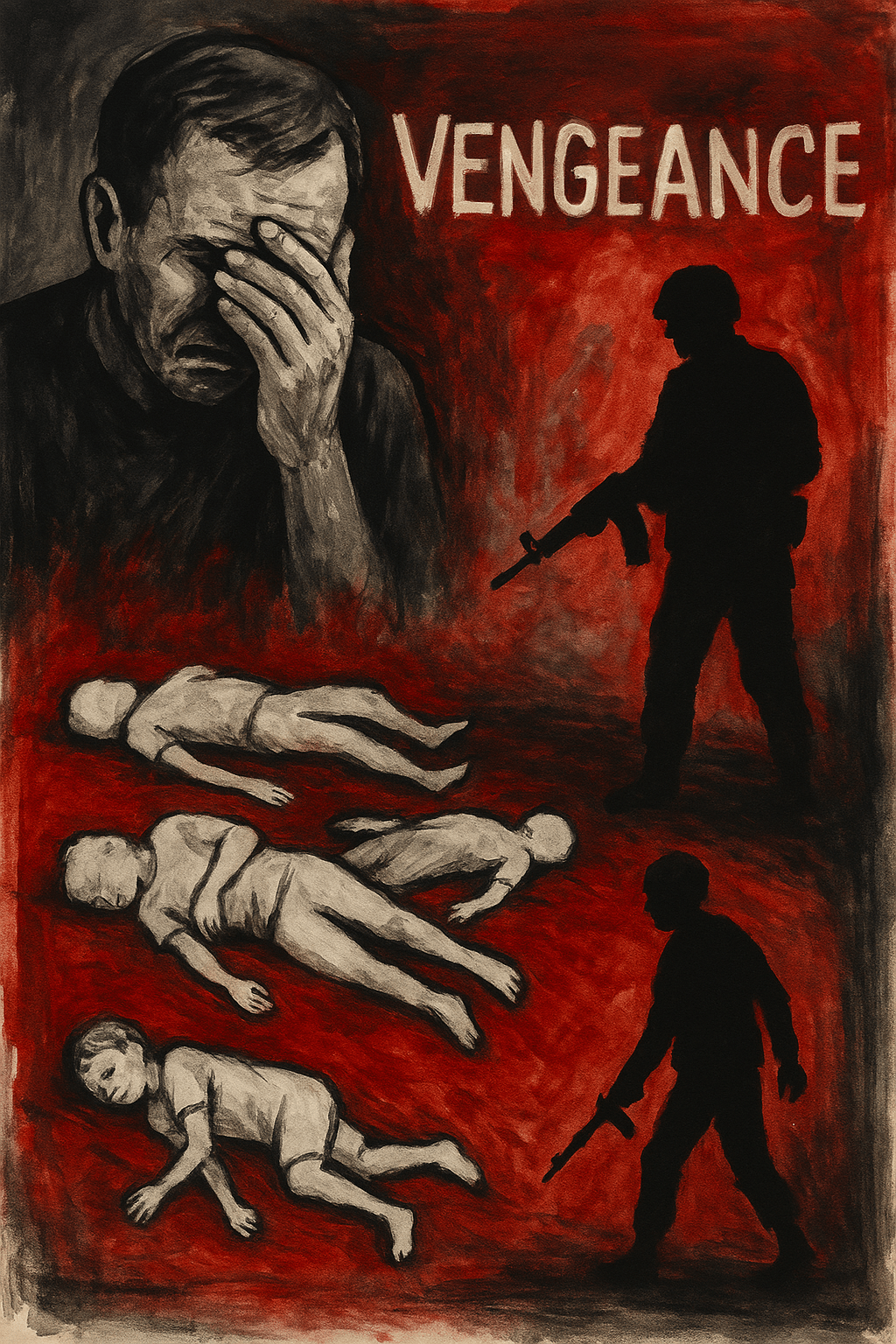
Lament is a holy act, a sacred space where the soul lays bare its grief before God. Today, I feel the deep pull toward this practice—not only to mourn the passing of a beloved leader but to grieve the loss of the values he carried with such grace. There is a profound sorrow in beholding the chasm between what once was and what now is, between the hopeful vision of a world bound together by love and the fractured, fragile reality we inhabit. Lament allows us to name this heartbreak, to sit with the weight of all that has been lost, and to cry out to the One who holds our brokenness in divine tenderness. It is in this sacred ache that the seeds of restoration are sown.
I hear the voice of Scripture calling: “Weeping may linger for the night, but joy comes with the morning” (Psalm 30:5). Our tears are not the end of the story; they are the beginning of transformation. Mourning must give way to longing, and longing must lead us to action.
Longing is a powerful force—it stirs the heart, awakens the spirit, and compels us to imagine something more. It refuses to let us sit idly in our grief, urging us instead to look toward what could be. True longing doesn’t end with desire; it propels us forward, demanding that we take the first, trembling steps toward change. Longing births vision, and vision calls for action—action rooted in love, justice, and mercy. It invites us to become co-creators with God, stepping into the work of healing and rebuilding, so that the world we yearn for becomes the world we help bring to life. It is through this holy movement from longing to action that transformation begins.
What Must We Reclaim?
Jesus calls us to be “the salt of the earth” and “the light of the world” (Matthew 5:13-14). Salt preserves what is good; light reveals what is true. But have we lost our saltiness? Has our light grown dim? If we are to reclaim the soul of this nation, we must begin with ourselves.
We must demand a return to character, integrity, and trust—not only in our leaders but in our daily lives. We must insist that dignity, compassion, and justice guide our decisions. And we must embody the humility that President Carter carried so gracefully, a humility that says, “Not my will, but Yours be done.”
This is not a call to nostalgia but to renewal. A return to character, integrity, and trust begins with each of us, in the quiet choices of our everyday lives. It is found in how we treat our neighbors, how we speak to those with whom we disagree, and how we navigate the countless moments that test our integrity. When dignity, compassion, and justice guide our decisions, they ripple outward, shaping not only our own lives but the culture of our communities. Such values are not bound by time; they are timeless truths, anchored in the very heart of God. They remind us that greatness is not found in power but in service, not in division but in love.
And why does this matter? Because the world is watching. Our children are watching. When we live with humility and grace, we show the next generation what is possible. When we insist on justice and mercy, we embody the Kingdom of God on earth. The way we live, the values we uphold, and the choices we make will either deepen the fractures of the world or help heal them. It matters because God calls us to more—to be a people of hope, a reflection of Christ’s light in a shadowed world. It matters because love, justice, and mercy, lived out in our lives, are not just ideals; they are the foundation upon which God builds His Kingdom.
A Holy Challenge
This is not the end of the story. It cannot be. As Paul reminds us in Galatians 6:9, “Let us not grow weary in doing good, for at the proper time we will reap a harvest if we do not give up.” We cannot give up.
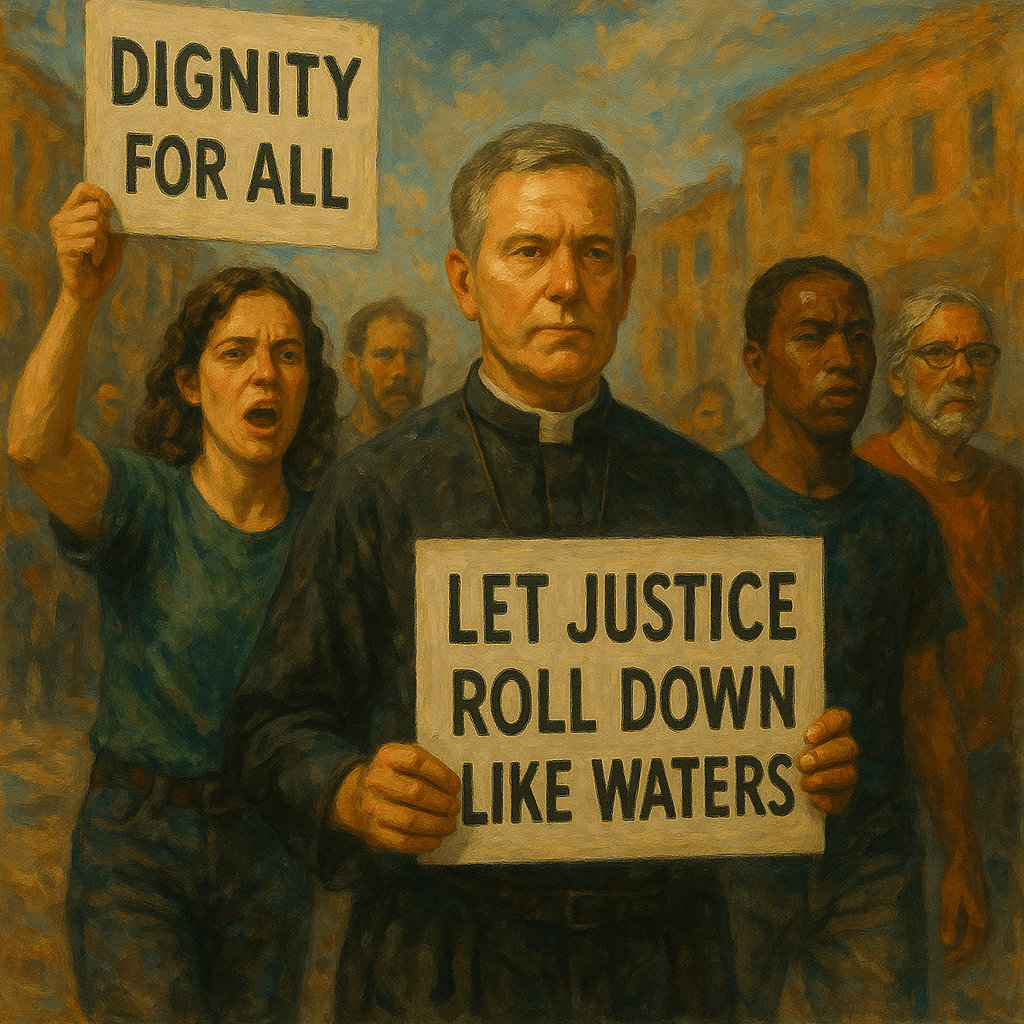
Let this moment of mourning and longing ignite in us a holy fire—a fire to imagine the world anew. Imagine a country where truth is not negotiable, where leaders lead with integrity, and where every human being is seen as a child of God. Imagine a world where love conquers fear, where justice flows like mighty waters, and where mercy is not weakness but the strength that binds us together.
And then, let us do more than imagine. Let us live it. Let us commit ourselves anew to the values we mourn, to the dignity and decency we long for, and to the hope that with God’s grace, we can build a better world.
We said goodbye today to a remarkable servant of Christ, but we do not have to say goodbye to the vision he inspired. Let us carry that vision forward—with humility, with grace, and with the unshakable belief that love will always have the final word.
Lament for Broken Leadership
O God of justice and mercy,
We cry out to You for the brokenness we see in our leaders.
Once, we were led by those who sought to serve rather than to rule,
But now, we are plagued by ambition, greed, and corruption.
Where integrity once stood firm, compromise has taken root.
Where truth was once upheld, lies now distort and divide.
We lament the loss of leaders who guided with humility,
Who spoke for the voiceless and worked for the common good.
Forgive us, Lord, for allowing this brokenness to persist.
Raise up leaders who seek You first, who embody justice, mercy, and love.
Lord, in Your mercy, hear our prayer.
Lament and Hope
O God of hope,
Even in our lament, we trust in Your promises.
We weep, but not as those without hope,
For we know that You are faithful.
Let our tears water the seeds of transformation,
And let our cries rise to You as incense.
Come, Lord Jesus, and make all things new.
Restore what has been lost, heal what has been broken,
And bring forth Your Kingdom of love, justice, and mercy.
Lord, in Your mercy, hear our prayer. Amen.

 thoughtsprayersandart.com
Leave a comment