The Gospel of 86: How a speakeasy door in Greenwich Village became an unlikely scripture for the American soul
There is a door on Bedford Street with no sign. It has never had one. For a hundred years, you had to already know it was there. To find Chumley’s, you needed to be initiated — told by a friend, a lover, a fellow traveler of the night. This was not a place that advertised itself to the world. It was a place that waited for the worthy.
In that sense, Chumley’s was never just a bar. It was a threshold.
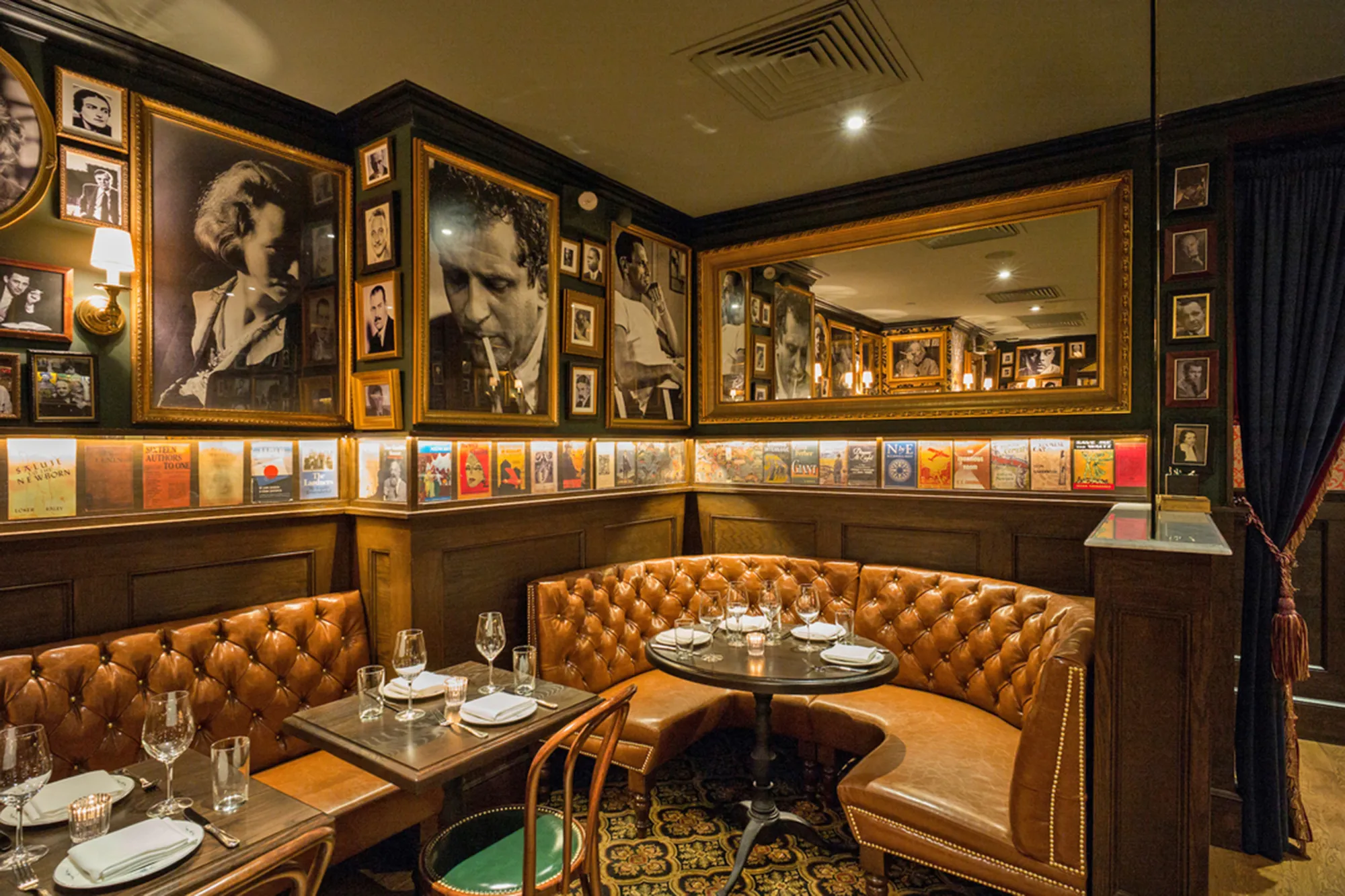
The building at 86 Bedford Street in Greenwich Village began as a blacksmith’s shop, was rumored to shelter runaway slaves through tunnels beneath its floor, and in 1922 became the discreet domain of Leland Stanford Chumley — radical, Wobbly, dreamer, and keeper of illegal whiskey. The place drew Hemingway and Fitzgerald; Edna St. Vincent Millay and John Steinbeck; the Beat poets and the Greenwich Village bohemians. Dust jackets lined the walls like relics in a chapel. Book jackets were the icons. Writers were the saints.
But the deeper story of Chumley’s, and the phrase born inside it, is a story about America’s strange, persistent hunger for the sacred hidden inside the profane.
“To be ’86’d’ is to be expelled from the garden. And like all exile myths, it contains the seed of return.”
The number and the door
The legend goes like this: when the police, often bribed and forewarned, were about to raid the speakeasy, the bartender would shout a single word: “86.” Patrons drank the last of their cups and slipped out through the unmarked door at 86 Bedford Street while officers entered through Pamela Court. The number was the address. The address was the escape. The escape was the ritual.
Whether this is precisely true matters less than the fact that Americans needed to believe it. The word “86” — to cut off, to cast out, to erase — has traveled from the diner counter to the Wall Street trading floor to the everyday vernacular, meaning everything from “we’re out of the soup” to “get rid of it.” A slang term born in a speakeasy has become a universal American verb of negation.
But look at what “86” really encodes: it is the language of the threshold. Of who is permitted and who is not. Of what is served and what is withheld. In almost every culture on earth, the guarded door is sacred architecture. The temple gate. The city wall. The velvet rope. We have always understood that what lies behind the unmarked entrance is not ordinary — and that exclusion from it carries spiritual weight.
A note on the building itself: 86 Bedford Street was constructed in 1831 as a Federal-style structure. Before the speakeasy, its tunnels were reportedly used as part of the Underground Railroad, sheltering those escaping enslavement. The same hidden passages that carried people to freedom later carried bootleg whiskey. The threshold was always, in some sense, sacred ground.

Prohibition as American Gnosticism
To understand Chumley’s spiritually, you must understand Prohibition not as a failed policy but as a failed theology.
The temperance movement was, at its heart, a religious movement, driven by evangelical Protestantism, the Social Gospel, a genuine belief that the body was a temple and alcohol its desecration. The Eighteenth Amendment was not merely a law. It was an attempt to legislate sanctity. To make the entire nation, by decree, clean.
What Prohibition produced instead was Gnosticism: the ancient spiritual impulse that says true knowledge, true freedom, and true life is hidden. That the official world is fallen and corrupt, and that beneath its surface lies a secret world where the real things happen. The speakeasy was not a crime. It was a counter-church. It met in unmarked buildings. You had to be vouched for to enter. There were passwords and secret doors. The initiates gathered, drank, and talked about the things that mattered — love, death, literature, revolution. The sacred poured from brown paper bags and teacups.
Chumley’s was perhaps the finest expression of this impulse in American history. Its walls bore the faces of those who had wrestled with the deepest questions a culture can ask: Faulkner with his Southern gothic grace and damnation; O’Neill with his Greek tragedies set in American ports, Steinbeck with his dust and dignity. These were not decorations. They were the congregation.
“The speakeasy was not a crime. It was a counter-church, meeting in unmarked buildings, requiring initiation, offering what the official world had declared forbidden.”

The spirituality of the hidden door
Every major spiritual tradition carries some version of the unmarked door. In Jewish mysticism, the Kabbalistic concept of the hidden world — the concealed Ein Sof — teaches that the most sacred things cannot be pointed to directly. In Sufi Islam, the wine-house of the mystic poets (Rumi’s tavern, Hafiz’s cup) is not a literal bar but a metaphor for divine intoxication, the place where the ego dissolves and the soul encounters God. In Christianity, the kingdom of heaven is hidden like a treasure in a field, like yeast in bread, like a pearl of great price — known only to those who seek.
The speakeasy drew on all of this, not consciously, not theologically, but through the deep grammar of human longing. You went to Chumley’s not just to drink. You went because behind the unmarked door, the ordinary rules did not apply. Time moved differently there. Conversations went places they couldn’t go in daylight. The law was suspended, and in that suspension, something else, something that felt more real, was briefly possible.
This is what scholars of religion call “liminal space”: the threshold between the ordinary world and the sacred world, where transformation becomes possible. The word “limen” is Latin for doorstep. And 86 Bedford Street is, literally and spiritually, one of the great doorsteps of American culture.
To be 86’d: the theology of exile
If entering Chumley’s was a kind of initiation, then being “86’d” — expelled — carried its own spiritual charge. To be 86’d is to be cast out of the liminal space, returned to the ordinary world, denied the threshold. It is, in miniature, the myth of expulsion from the garden: the one who has broken the covenant, who has made themselves unworthy of the sacred space, is sent back through the door into the street.
Every culture has this myth. Adam and Eve east of Eden. Dante expelled from Florence. The prodigal son in the far country. Exile is not merely punishment — it is a spiritual condition, one that carries within it the possibility of return, repentance, transformation. You cannot be 86’d from a place that doesn’t matter. The depth of the expulsion is a measure of the sacredness of what you’ve been expelled from.
That this word — 86 — survived Prohibition, survived Chumley’s, survived the twentieth century and arrived intact into our own time says something about how deeply Americans feel the pull of the hidden sanctuary and the fear of exclusion from it. Every time a chef tells the kitchen to 86 the special, every time a bouncer 86s a patron, every time the word slides into casual use, it carries this ghost: the unmarked door, the last cup, the escape into the night.

What survives the collapse
In 2007, a chimney at 86 Bedford Street collapsed into the bar, and Chumley’s was shuttered for nearly a decade. When it reopened in 2016, it was a different place, reservation-only, upscale, the rough edges sanded smooth. Then COVID closed it for good. The physical Chumley’s is gone.
But the idea of Chumley’s, which is also the idea of America at its most spiritually alive, has not gone anywhere. It is the idea that the most meaningful gatherings happen behind unmarked doors. That literature is a form of survival. That the best conversations happen when the law looks away. That there is a door somewhere with no sign on it, and if you know the right people, you can find it, and behind it is a room where time pools in amber light and everyone is a little more themselves than they are anywhere else.
This is not nostalgia. It is a description of what human beings need, what they have always needed, and what they will continue to build for themselves, in speakeasies or salons, in jazz clubs or poetry circles, in text threads and underground shows and late-night kitchens. The forms change. The hunger does not.
The number on the door was always just a number. The door was always the point.